Last week I wrote about plastic resin codes. This week, I’m going to further discuss what we,
the consumer, can do to wisely use and reduce plastics in our daily lives. If take three small steps to understand plastic,
we can make better choices for our
health and the health of the planet.
 Recycling is a big
part of using plastics. The first
thing you can do is find out what you can recycle locally. Not all recycling programs take all seven
resin codes so check with your county to see available options.
Recycling is a big
part of using plastics. The first
thing you can do is find out what you can recycle locally. Not all recycling programs take all seven
resin codes so check with your county to see available options.
Sustainable living options aren’t huge here in the South, so
I am excited to say that our curbside recycling program takes all seven codes,
everything but Styrofoam and plastic bags!
Our local zoo will recycle Styrofoam, and of course grocery stores and
office supply stores will recycle the plastic bags. Realizing that I could
recycle all the plastic I was using was a big start to a greener shopping list!
The second step is
reducing the amount of plastic we use. I’ve spent the last two years trying
to find ways to reduce the plastic in our life. I thought I’d share a few of
them that have been successful with our family of four:
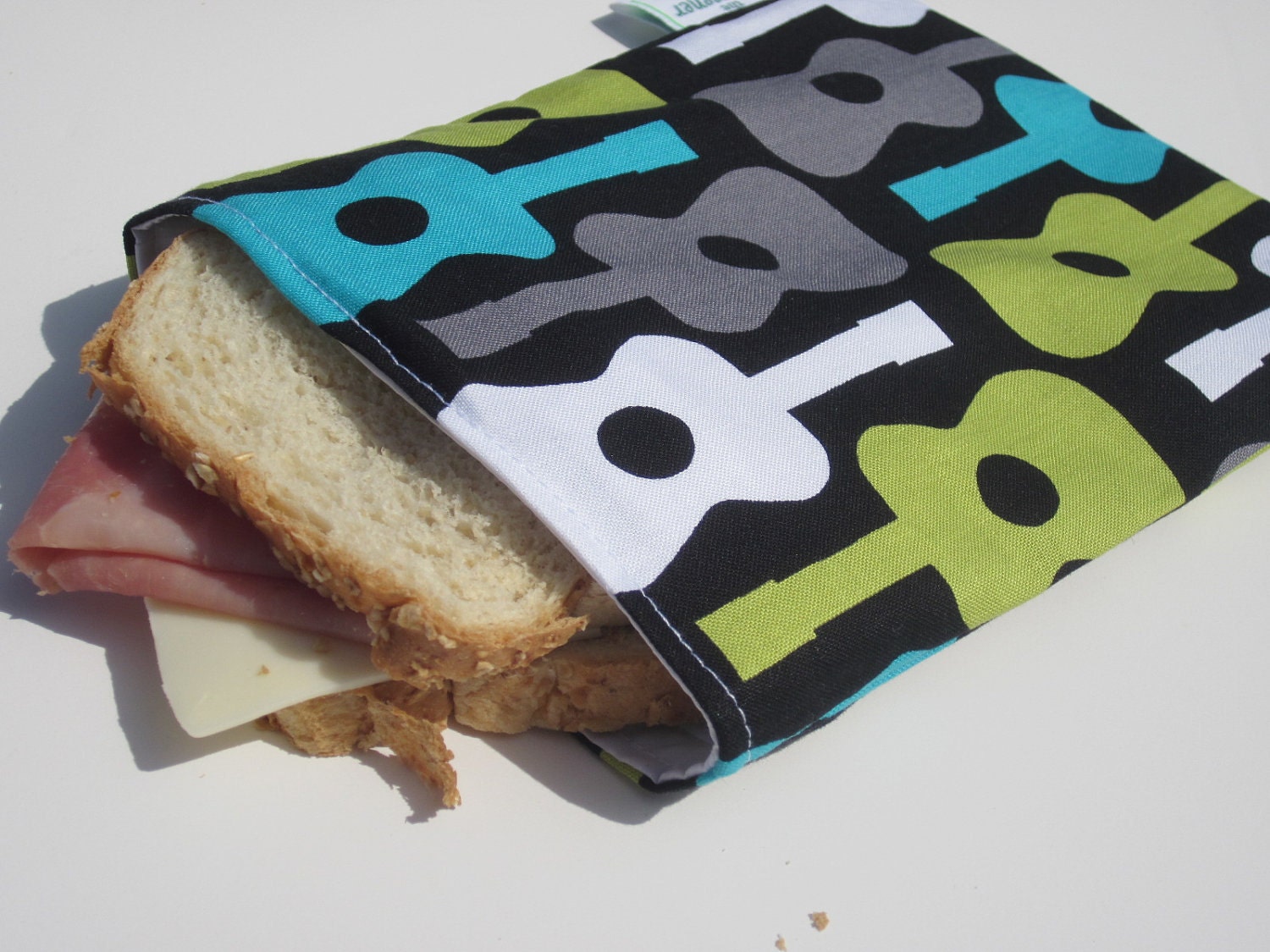
 Reduce sandwich bag
use. When our daughter started
school we invested in some adorable reusable cloth sandwich bags on Etsy. They have been great and easy to
clean. I still use sandwich bags for
things like freezing the fish that we catch but I am using at least 5 less bags
a week, so that’s 260+ plastic sandwich a year that don’t go into the environment,
(and I don’t have to pay for them). Sandwich bag shown in photo was created by Upcyclers team member Greener Route.
Reduce sandwich bag
use. When our daughter started
school we invested in some adorable reusable cloth sandwich bags on Etsy. They have been great and easy to
clean. I still use sandwich bags for
things like freezing the fish that we catch but I am using at least 5 less bags
a week, so that’s 260+ plastic sandwich a year that don’t go into the environment,
(and I don’t have to pay for them). Sandwich bag shown in photo was created by Upcyclers team member Greener Route.
Replace plastic with
glass when possible. Each time my plastic salad dressing bottle was empty,
I would replace it with a glass salad dressing bottle. Sometimes there isn’t an option for glass
(i.e. mayo, yogurt, cream cheese, etc), but I found I could find most condiments
were available in a glass container.
Stop using plastic
water bottles. Use stainless steel water bottles or other reusable bottle options.
This was one of the first things I tried to tackle, and it was easier that I
thought it would be!
 Use cloth bags. Yes, I’m sure you’ve heard of this popular way
of reducing plastic. Plastic bags are
offered to shoppers everywhere. I use my
cloth bags for more than grocery shopping though. I try to keep different sized bags in my car
so when I’m out running errands I can keep from using plastic everywhere I go. A
quick trip to the pharmacy I grab a small cloth bag I keep in my purse. A trip to the local library and I grab the medium
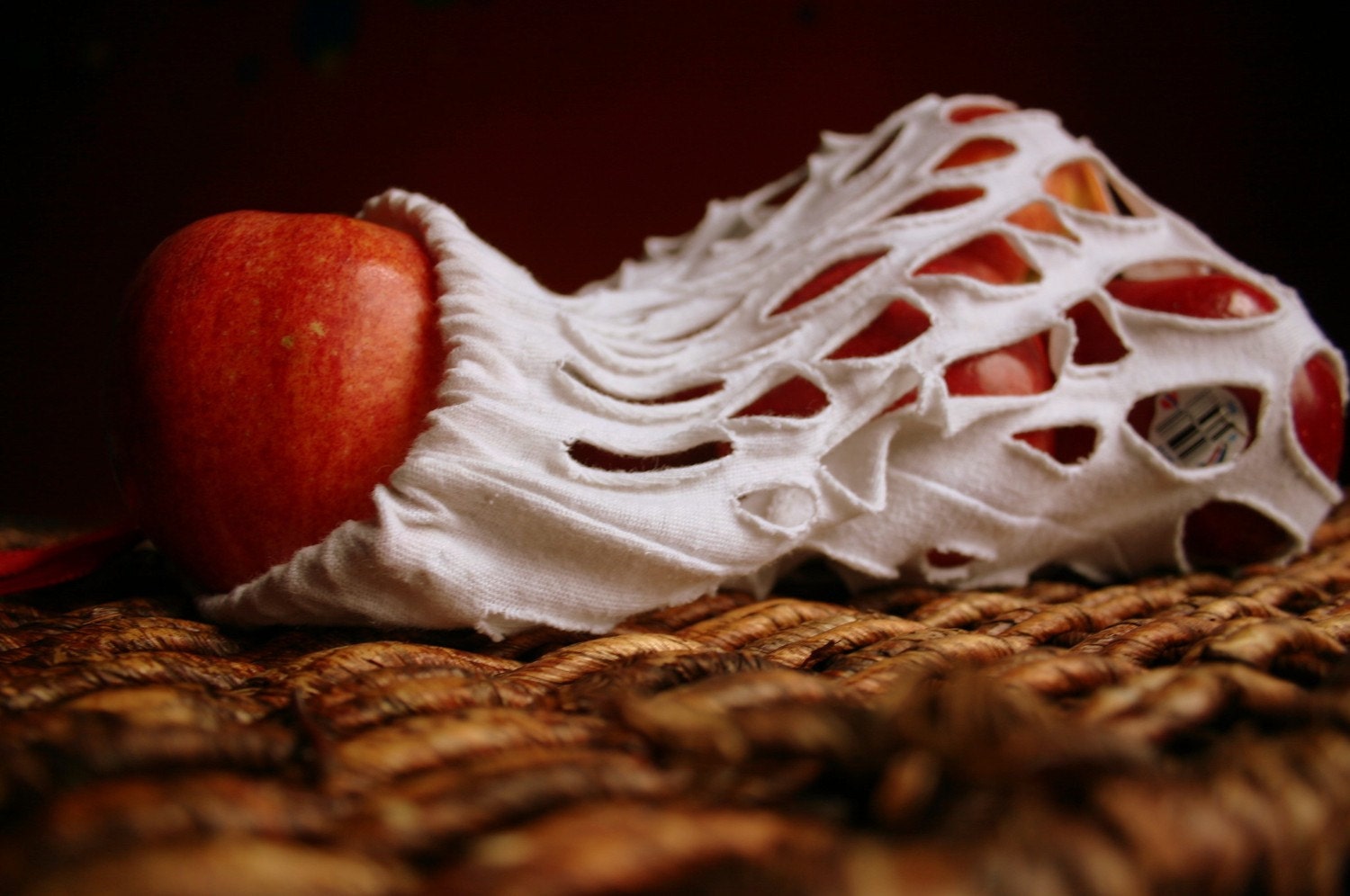
sized bag that is behind the seat of my car. At the farmers market, I pull out my reusable
produce bags. When I forget them (because
sometimes they bring the items in to the house and they don’t go back out), I
ask for paper or just carry the items without a bag. Produce bag shown in photo was created by Upcyclers team member TNTees.
Use cloth bags. Yes, I’m sure you’ve heard of this popular way
of reducing plastic. Plastic bags are
offered to shoppers everywhere. I use my
cloth bags for more than grocery shopping though. I try to keep different sized bags in my car
so when I’m out running errands I can keep from using plastic everywhere I go. A
quick trip to the pharmacy I grab a small cloth bag I keep in my purse. A trip to the local library and I grab the medium
sized bag that is behind the seat of my car. At the farmers market, I pull out my reusable
produce bags. When I forget them (because
sometimes they bring the items in to the house and they don’t go back out), I
ask for paper or just carry the items without a bag. Produce bag shown in photo was created by Upcyclers team member TNTees.
 Upcycle plastic
containers for non-food related tasks. We store crayons, toys, screws, beads,
and an assortment of other household items in our leftover plastic containers.
My favorite plastic containers to upcycle: yogurt, spinach, and nut.
Upcycle plastic
containers for non-food related tasks. We store crayons, toys, screws, beads,
and an assortment of other household items in our leftover plastic containers.
My favorite plastic containers to upcycle: yogurt, spinach, and nut.
Start small and pick one way you can reduce plastic in your
life. I didn’t change everything at once.
I would integrate one new method, and
then I would move on to the next one.
The third step is
using plastic smarter. We can’t
eliminate all the plastic in our daily lives.
My two year old isn’t going to use a glass sippy cup, so I make sure
that the plastic cups she does use are BPA free and have a resin code 2, 4 or 5
on them. I make sure my food storage containers
and other plastic wares display these less toxic resin codes on them as well.
 If there is NO resin code on your plastic
containers, call the manufacture and ask.
Since the resin codes are only for recycling, this would tell me that the
manufacture doesn’t care about the environment and recycling the plastic they
are creating!
If there is NO resin code on your plastic
containers, call the manufacture and ask.
Since the resin codes are only for recycling, this would tell me that the
manufacture doesn’t care about the environment and recycling the plastic they
are creating!
To help remember the resin codes, I hang a list on the inside
of my kitchen cabinet ----->
Whether it is buying organic, handmade or reducing plastic
use, becoming ethical consumers is something that everyone should look into. Does value or values determine your purchases?
Educating yourself about the products you buy & their affect on the environment
is vital to our future and the future of our planet.