It's been a long time since we've brought you daily posts on our blog~ a huge thanks to
Bee from The Wooden Bee and
Tricia from Upcycled Stuff for keeping us going even as intermittent as we've been! Without them, we may have fallen to the wayside like so many other blogs. I have had one tough year, and I don't know what I would have done without them and the
other team leaders on Etsy I have come to love and count on. They, too, have had their own tough and busy times and have managed to still keep us posted with contest results, articles, discussion threads, tweets, Facebook posts, treasuries and our weekly Linky Parties. They have taught me the meaning of the word TEAM.
That said, I hope with our upcoming third anniversary on November 8th, we can start a new wave of consistent activity in our upcycling movement with new and exciting things to put us back on track. We are looking for more contributors to our blog, social networks and Etsy discussion threads, as well as developing new features and, ultimately, a new website with more to offer everyone. So with that said~ here is the first!
Wednesday's Welcome!
Each week we will feature three
new Upcyclers~ either from our team on Etsy, our Twitter followers or our fans on Facebook. Whichever venue we find each week's featured upcycling artists, writers or companies, we promise to bring you something awesome and interesting every Wednesday. All we ask is that you welcome them by checking out their shops, pages, websites, blogs, etc. Whether you tweet, share, tumble, stumble, pin, comment or purchase~ show your Love 2 Upcycle by supporting your fellow Upcyclers!
But don't think we are going to neglect our dedicated and long time Upcyclers, we've got plans for you, too! We will sponsor new contests and giveaways, revamp our Blogs 2 Love and share more DIY ideas, tutorials, and links to the most innovative sites we can find so we can inspire you to keep upcycling and living a sustainable lifestyle. Our world is rapidly changing it's attitude toward what we do and it's up to us to show everyone it's not a trend~ it's a necessity. We all must face the need to adapt to the demand for accountability for how we use the resources of our world and to be responsible inhabitants of not just this planet, but the universe. The beauty of the internet and social networking is the opportunity it affords us to reach out globally to spread the word with an impact.
But we need your help. No one can do it alone, we have to do it together.
Our thanks again to all of you and~ Welcome to this week's new Upcyclers...
The first is a new member of
Upcyclers on Etsy. Why this one? You are going to love how they describe upcycling. I could not have said it better myself...
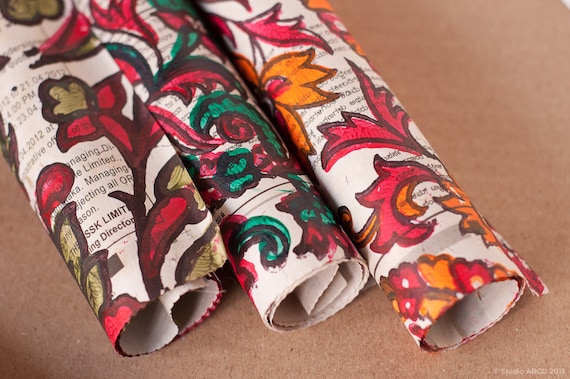
Studio ABCD
A graduate from National Institute of Fashion Technology in Bangalore, India, and a student of architecture, Raahul Khadaliya has immersed himself in a sustainable lifestyle that is emulated in his innovative, yet traditionally based products. Using a handmade, eco-friendly method of block printing firmly routed in his culture, he creates brightly colorful and artistic gift wrap from discarded newspaper, as well as other products. Yet, even more beautiful is how he describes why and what he does:
"It is high time now to link things we have used, to the things we will use, and this link between the two holds a promise to a sustainable possibility for future. We know the grave possible problems in times to come, and its ironic that we don’t do much to help the situation. The solution is as simple as rethinking the complete design process incorporating ideologies like cradle to cradle design into both minor and major systems of creation. The need of the hour is to justify the energy, raw materials, human resources and other natural energy that are used in creation of a product and question ourselves each time we discard any thing we use.
To expect a third party to save the environment is passé, when everyone of us can help the cause by re-using things of daily requirements…" ~Visit his shop and profile to read more of his philosophies. He also illustrates his idealogy and method in an amazing infograph on his website.
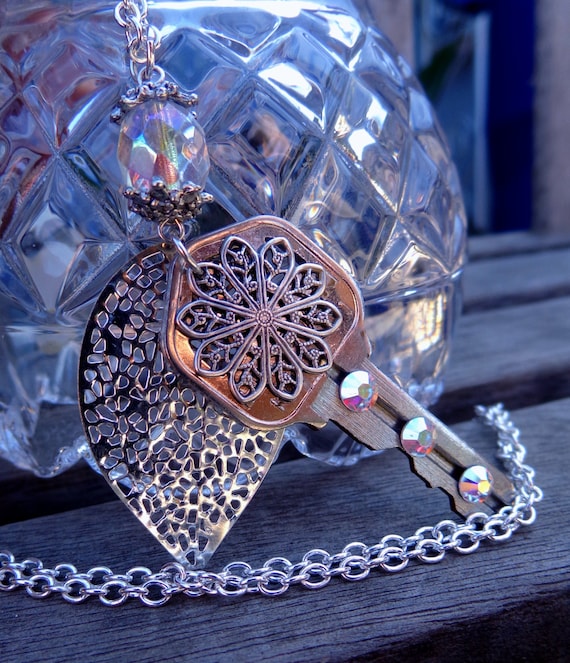
B - Reloved
Our next Welcome is to another new member on Etsy~
"If the only thing that can not be recycled is wasted time, I thought I might as well put my time and any God given talent I have into making things beautiful by using the power of Recycle. Mission: To bring a creative approach to recycling."
We, in all honesty, prefer to call Christa Behen's approach to the art of recycling~ upcycling, but we also know that many still are more familiar with the term recycling. No matter, it's beautiful!
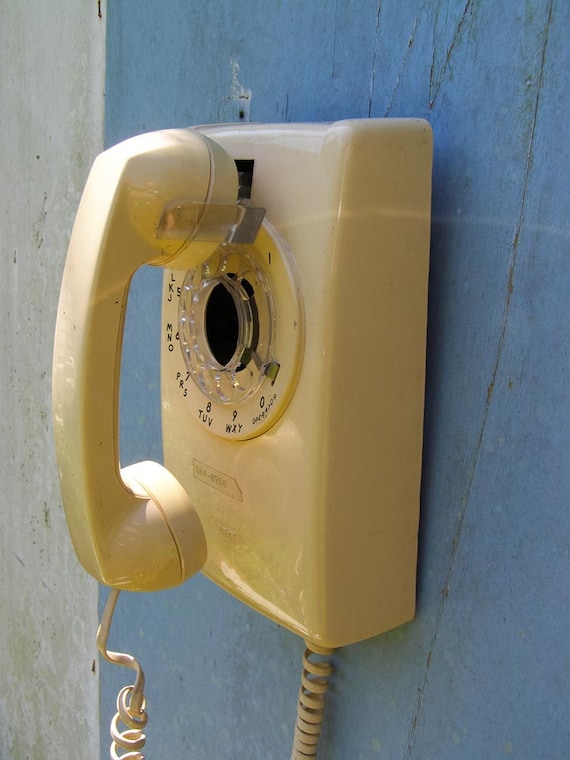
A hearty welcome also to a new fan on Facebook~ Redeemed, a Museum/Art Gallery in Sharon Pennsylvania, held it's Grand Opening on September 28th! This shop looks amazing, I wish I could take a trip north just to see all the wonderful upcycled treasures it holds! Stop by if you are in the area, or give them a
'Like' and a Welcome on Facebook!
We hope you've enjoyed meeting these three new Upcyclers! I can't wait to Welcome more of you next week!
;) Cat


.jpg)