Showing posts with label recycling. Show all posts

June 18, 2012

Demystifying T Shirt Yarn Series: What is T Shirt Yarn?

I was ready for many things when I opened my supplies shop.  I was ready to spend many hours creating inventory.  I was ready to spend many hours building up my social networking and involvement in online communities.  I was ready to build my accounting system and work out all the business details.  I was ready to make mistakes and learn from them.  However, I was not ready for the question I would most frequently be asked, "What is t shirt yarn?".

The other thing I hear a lot is, "I've seen/heard of it, but haven't tried it because I don't know how to use it".  So I have decided to do 2 things with this article.  First, I am going to clearly explain what t shirt yarn is and how to use it correctly.  Second, I will tell you how to tell what to look for in a high quality t shirt yarn.  Third, I will tell you what your expectations should be.  Fourth, I will tell you all the ways this is eco friendly.  And fifth, I will link you to my t shirt yarn giveaway, where you can enter for a chance to win a literal rainbow of t shirt yarn and try it for yourself for free!  Wanna see it?


What is T Shirt Yarn and How Do I Use It?
Very simply, t shirt yarn is made from t shirts that have been cut into a continuous loop and then carefully stretched into a cord.  It usually ranges in widths from 1/8" to 1/4".  Depending on the t shirt it is made from it can be rather stiff or it can be very soft and some a little stretchy.  Once you learn how to use it, it becomes a very versatile and eco friendly medium to work with.  

Let's quickly discuss some t shirt yarn terms.  T shirt yarn is measured in WPIs.  That means "wraps per inch".  I like to use a ruler to describe this.  So if you wrap a 4 WPI yarn around a ruler you should have to wrap it around 4 times to equal 1 inch.  I like to remember that a 4WPI t shirt yarn is 1/4" wide and an 8WPI t shirt yarn is 1/8" wide.  The larger the WPI the thinner the yarn is.  8WPI is about as thin of a width as you can get.  Anything smaller tends to not curl up well so it is really tattered looking and tends to break easily.

So how do you use t shirt yarn?  You use it the same way you would any bulky yarn, but there are a few things you should know to help you get started on that first project with t shirt yarn.  T shirt yarn has 2 sides.  One side is flat and the other side shows the cord.  There is not a twist in it like traditional yarns so you will need to keep your yarn straight, by keeping the same side up when holding it in your fingers, to keep it consistent throughout your project.  Good t shirt yarn should be a consistent width throughout the entire ball, but sometimes you see a spot that is a little wider.  When/if you see this, gently stretch the yarn a bit and it will thin to the width you need.  You also need to remember that even an 8WPI, which is usually the thinnest you will see, is still pretty bulky and you will need to use a size J crochet hook (or the equivalent if knitting) to properly work with it.  If you are using a bulkier t shirt yarn like a 4 WPI I recommend nothing smaller than a size M crochet hook or the equivalent if knitting.


How Do I Look For Quality T Shirt Yarn?
The most important thing to look for in a quality t shirt yarn when you are purchasing is good cording.  By that I mean that the cord has curled nicely into the yarn and you don't see any edges.  You are looking for the cording to be like this photo:


See how the ends curl in and there is none of the outer edge showing?  That is what you are looking for.  Of course, you don't want any stains or any holes from the t shirt showing either.  A quality shop will cut any areas with a hole or stain out of it.


What should your expectations be?
In the world of t shirt yarn, it can be difficult to find matching colors and textures.  Just like each t shirt feels a little different, so does each ball of t shirt yarn.  For me, that is often part of the charm of it.  Each ball is original and cannot be copied.  That charm can wear off fast if you are wanting to do a large project and want everything to match.  That doesn't mean that you can't use t shirt yarn.  Yes, it is difficult to find large lots of matching t shirt yarn, but it isn't impossible.

There are a couple of ways you can get around this.  First, shops that sell t shirt yarn will sometimes have yarn from event t shirts.  These are brand new shirts that are headed for a dumpster, until someone like myself of Mike from Mike's T Shirt Yarn, comes along and rescues it.  These are sold in bulk packages and are fabulous for a project that you want a uniform color and texture to, as each ball will be the exact same color and texture.  The other option is to use a shop that dyes their shirts.  They can dye up a batch of matching balls for you.  


How is T Shirt Yarn Eco Friendly?
Not all t shirt yarn is what I would consider eco friendly, but I am a bit of a purest when it comes to this.  Why am I a purest?  Because 11 million tons of textiles go to the dump each year.  Because creating 1 pound of textiles emits more than 7 pounds of CO2 and the average t shirt wastes 700 gallons of water during manufacturing.  You see where I am going with this?  There is a great info graphic that shows all of this information on the Naturally Advanced Blog.  Upcycling t shirts into yarn is a fabulous way to save t shirt from going to the dump and help reduce the 11 million tons of textile being dumped annually.

So what makes t shirt yarn eco friendly?  Eco friendly t shirt yarn is usually made from gently used t shirts.  The exception for me is event t shirts that a company or group is going to throw away.    That being said, when it comes to a product like t shirt yarn, there is room for all kinds of variety.  I have seen many people who cut new shirts to make t shirt yarn and others that dye them like I mentioned before.  Outside of event t shirts that are one breath away from a dumpster, cutting up a new t shirt to make yarn is in no way eco friendly, as a new t shirt is in no immediate danger of seeing a dumpster.  I think dying t shirts can be eco friendly if they are using a used t shirt and the dye that is being used is biodegradable and doesn't contain any harmful chemicals.  There is still some water being used in manufacturing these kinds of t shirt yarn, but if handmade the water used would be minimal and certainly no where near the 700 gallons needed in mass manufacturing.


Didn't You Say Something About A Giveaway?
I most certainly did!  If you want to win that beautiful rainbow of t shirt yarn, all you need to do is log into your Facebook account and use this link.  Sorry Facebook haters, but this does everything for me, which leaves me more time to make more yarn.  The drawing ends on June 30 and there are no shipping charges.  

I hope that t shirt yarn seems more comfortable to those of you who haven't tried it yet.  New mediums can be intimidating to work with if you don't know anything about them.  Next month I will be featuring some shops that use t shirt yarn to show its versatility.  You will see everything from rugs to baskets to clothing!   And then in August I will post an article full of tutorials so you can begin using t shirt yarn yourself!  

I also want to thank Mike from Mike's T Shirt Yarn for contributing to the article.

Love and Peace,
Luci

December 17, 2011

Countdown to Christmas Giveaway Extraganza~ Day 2!

Today's Giveaway features an upcycled "REcap" bracelet from Twitch and Whiskers!


And yes, those are marker caps! Pretty amazing, huh? But that's the wonder of upcycling and the way Mei-Ling's imagination works! She takes common tossables and trinkets and turns them into upcycled jewelry...She loves giving new life to old objects with a twist of whimsy! Mei-Ling is an elementary school teacher and jewelry designer with a passion for hunting and gathering treasures. After years of collecting, she claims a "light bulb flashed on and she found a fun use for all her goodies!"

Her Etsy shop, Twitch and Whiskers, is full of one of a kind, handmade creations designed with color and reuse in mind. She features her "REcap bracelets", "Thimbilism necklaces" and many other designs.


The variety of jewelry you'll find in Twitch and Whiskers is fantastic and Mei-Ling loves to share her creative process on her blog of the same name~ Twitch and Whiskers, and her REcap bracelets have also been featured on Earth 911!

And now you can enter today for a chance to win one of her upcycled, whimsical REcap bracelets!

First, be sure you are a follower of this blog, Love 2 Upcycle~ not a follower? Just look to the left and click. Voila! You are a follower. But you haven't entered yet.

Now, you can choose 4 of the following ways to enter, up to 4 times!

1. Check out Twitch and Whiskers favorite her shop and add them to your circle.
Then tell us here in a comment about your Favorite item in her shop!

2. Follow Mei-Ling's blog: Twitch and Whiskers!
3. Become a fan of Twitch and Whiskers on Facebook!
4. Tweet or share this Giveaway!

5. Pin one your favorite items from Twitch and Whiskers to Pinterest!

Remember, only 4 entries count, and each one must be left in a separate comment! If you don't have an email listed on your bio, leave it here in one of your comments. Deadline to enter is Midnight, December 21st!

Winner will be randomly drawn using Random.org's generator.
Good Luck and Merry Christmas!

Would you like to Sponsor a Giveaway on Love 2 Upcycle? You don't have to be a member of Upcyclers to be a sponsor, all Etsy sellers of upcycled or eco-friendly products are welcome! But of course, we'd love for you to join the team!

September 22, 2011

Greener Shopping: Plastics - part 2

Last week I wrote about plastic resin codes.  This week, I’m going to further discuss what we, the consumer, can do to wisely use and reduce plastics in our daily lives.  If take three small steps to understand plastic, we can make better choices for our health and the health of the planet.

Recycling is a big part of using plastics.  The first thing you can do is find out what you can recycle locally.  Not all recycling programs take all seven resin codes so check with your county to see available options.
Sustainable living options aren’t huge here in the South, so I am excited to say that our curbside recycling program takes all seven codes, everything but Styrofoam and plastic bags!  Our local zoo will recycle Styrofoam, and of course grocery stores and office supply stores will recycle the plastic bags. Realizing that I could recycle all the plastic I was using was a big start to a greener shopping list!

The second step is reducing the amount of plastic we use. I’ve spent the last two years trying to find ways to reduce the plastic in our life. I thought I’d share a few of them that have been successful with our family of four:

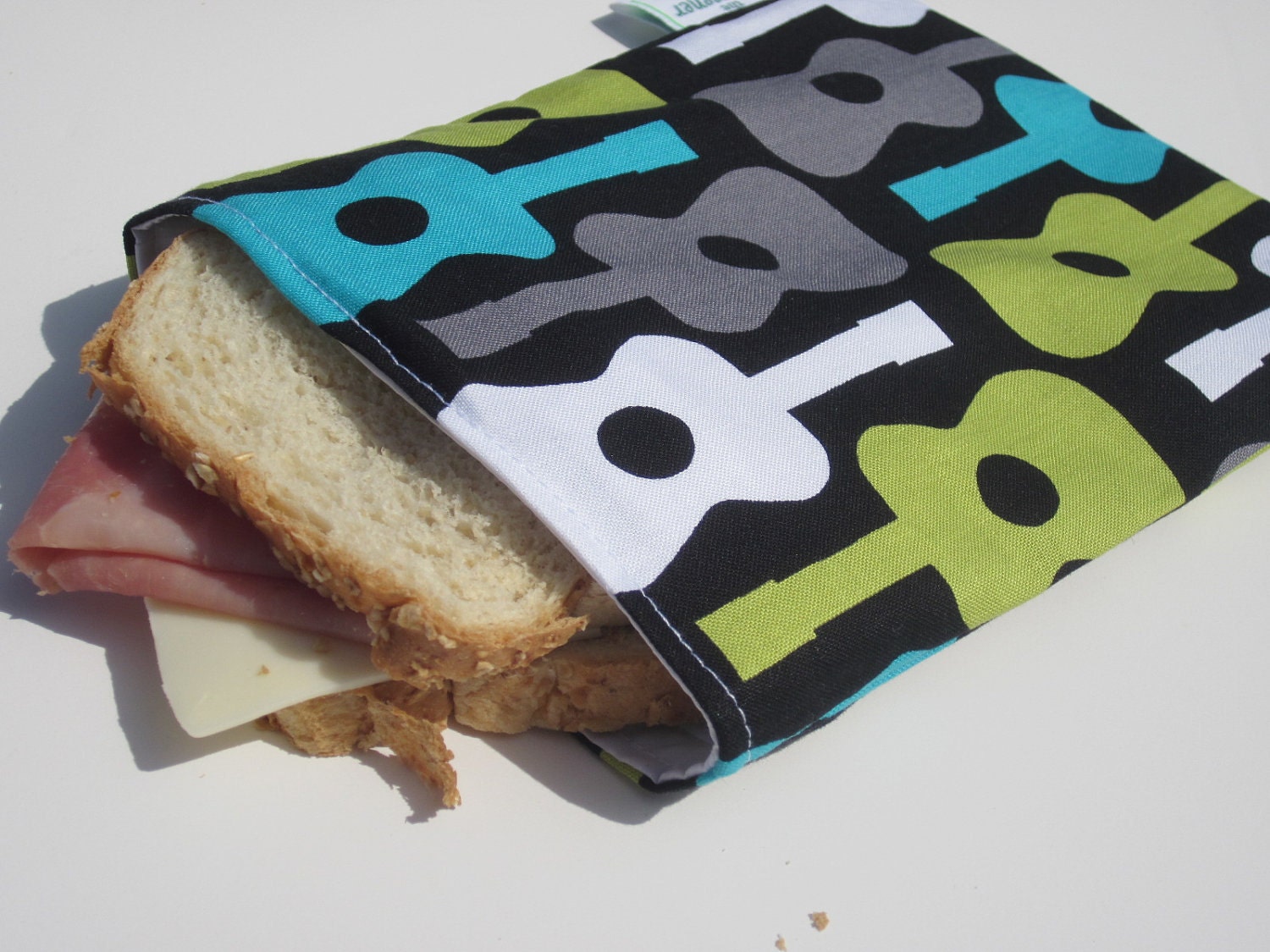
Reduce sandwich bag use.  When our daughter started school we invested in some adorable reusable cloth sandwich bags on Etsy.  They have been great and easy to clean.  I still use sandwich bags for things like freezing the fish that we catch but I am using at least 5 less bags a week, so that’s 260+ plastic sandwich a year that don’t go into the environment, (and I don’t have to pay for them).   Sandwich bag shown in photo was created by Upcyclers team member Greener Route.

Replace plastic with glass when possible. Each time my plastic salad dressing bottle was empty, I would replace it with a glass salad dressing bottle.  Sometimes there isn’t an option for glass (i.e. mayo, yogurt, cream cheese, etc), but I found I could find most condiments were available in a glass container.   

Stop using plastic water bottles. Use stainless steel water bottles or other reusable bottle options. This was one of the first things I tried to tackle, and it was easier that I thought it would be!

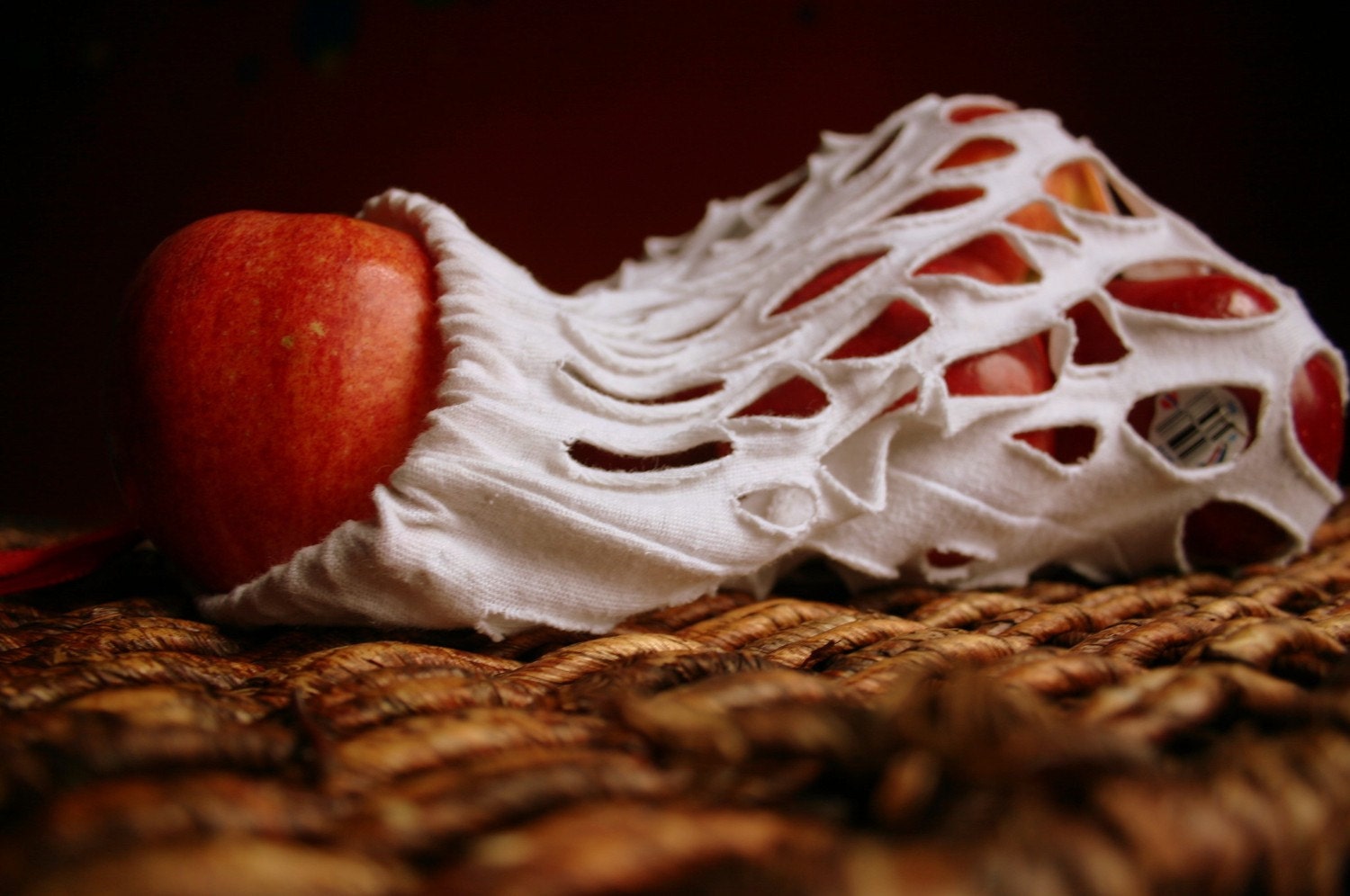
Use cloth bags.  Yes, I’m sure you’ve heard of this popular way of reducing plastic.   Plastic bags are offered to shoppers everywhere.  I use my cloth bags for more than grocery shopping though.  I try to keep different sized bags in my car so when I’m out running errands I can keep from using plastic everywhere I go.    A quick trip to the pharmacy I grab a small cloth bag I keep in my purse.  A trip to the local library and I grab the medium sized bag that is behind the seat of my car.  At the farmers market, I pull out my reusable produce bags.  When I forget them (because sometimes they bring the items in to the house and they don’t go back out), I ask for paper or just carry the items without a bag.  Produce bag shown in photo was created by Upcyclers team member TNTees

Upcycle plastic containers for non-food related tasks. We store crayons, toys, screws, beads, and an assortment of other household items in our leftover plastic containers. My favorite plastic containers to upcycle: yogurt, spinach, and nut.

Start small and pick one way you can reduce plastic in your life.  I didn’t change everything at once.  I would integrate one new method, and then I would move on to the next one.  


The third step is using plastic smarter.  We can’t eliminate all the plastic in our daily lives.  My two year old isn’t going to use a glass sippy cup, so I make sure that the plastic cups she does use are BPA free and have a resin code 2, 4 or 5 on them.  I make sure my food storage containers and other plastic wares display these less toxic resin codes on them as well.

If there is NO resin code on your plastic containers, call the manufacture and ask. Since the resin codes are only for recycling, this would tell me that the manufacture doesn’t care about the environment and recycling the plastic they are creating!
To help remember the resin codes, I hang a list on the inside of my kitchen cabinet ----->
See what else you can do to reduce and wisely use plastic, by visiting Healthy Child, Healthy World’s list of plastic solutions: http://healthychild.org/5steps/5_steps_1/

Whether it is buying organic, handmade or reducing plastic use, becoming ethical consumers is something that everyone should look into. Does value or values determine your purchases? Educating yourself about the products you buy & their affect on the environment is vital to our future and the future of our planet.


September 10, 2011

Greener Shopping: Plastics 101


Conscious Consumerism:

Plastics 101, or is it Plastics 1-7

Plastic is everywhere. The word plastic means capable of being shaped or molded. And it has shaped itself into almost every aspect of our daily lives.  However, scientists are finding that an unseen cost to using plastics may be the health of our planet and our bodies. The production and disposal of plastic contribute to an array of environmental problems.  If we take some time to understand plastic, we can became a wiser about using it, and therefore make better choices for our health and our environment.

A Small Chemistry lesson… Plastics are typically polymers of high molecular mass, and may contain other substances to improve performance and/or reduce production costs. ~Wikipedia

In 1988 The Society of the Plastics (SPI) Industry developed a set of symbols placed on plastics to identify the polymer type. The resin identification coding system is used internationally to allow efficient separation of different polymer types for recycling. The most common plastics have a resin code in a universal recycling symbol often found on the bottom of the product. It is an arbitrarily-assigned number that has no other meaning aside from identifying the specific plastic.

While doing my plastic research, I thought The Healthy ChildHealthy World Organization summarized the safety of the resin codes the best:
PET or PETE (Polyethylene Terephthalate): AVOID
Common Uses: Soda Bottles, Water Bottles, Cooking Oil Bottles
Concerns: Can leach antimony and phthalates.

HDPE (High Density Polyethylene): SAFER
Common Uses: Milk Jugs, Plastic Bags, Yogurt Cups

PVC (Polyvinyl Chloride, aka Vinyl): AVOID
Common Uses: Condiment Bottles, Cling Wrap, Teething Rings, Toys, Shower Curtains
Concerns: Can leach lead and phthalates among other things. Can also off-gas toxic chemicals.
LDPE (Low Density Polyethylene): SAFER
Common Uses: Produce Bags, Food Storage Containers

PP (Polypropylene): SAFER
Common Uses: Bottle Caps, Storage Containers, Dishware
PS (Polystyrene, aka Styrofoam): AVOID
Common Uses: Meat Trays, Foam Food Containers & Cups
Concerns: Can leach carcinogenic styrene and estrogenic alkylphenols
 

Other this is a catch-all category which includes:
PC (Polycarbonate): AVOID - can leach Bisphenol-A (BPA). It also includes ABS (Acrylonitrile Butadiene Styrene), SAN (Styrene Acrylonitrile), Acrylic, and Polyamide. These plastics can be a safer option because they are typically very durable and resistant to high heat resulting in less leaching. Their drawbacks are that they are not typically recyclable and some need additional safety research. New plant-based, biodegradable plastics like PLA (Polylactic Acid) also fall into the #7 category.


Now go look at what number is on all of your food containers.  What are they? While 2, 4, 5 are the safer, they are sometimes hard to find. For instance when it comes to condiments, I can’t find a ketchup or mayonnaise bottle without a one on the bottom.

If there is NO resin code on your plastic containers, call the manufacture and ask.  Since the resin codes are only for recycling, this would tell me that the manufacture doesn’t care about the environment and recycling the plastic they are creating!!!


To further understand plastic and its numbers, let’s look at the second part of recycling it…what is plastic being recycled into?  That ketchup bottle with a resin code of one isn't turned into another ketchup bottle. It is recycled into polyester fibres, which are a base material for the production of clothing, pillows and carpets.

Here’s a quick summary of what the resin codes tells us the plastic can become:
Polyester fibres, thermoformed sheet, strapping, and soft drink bottles.

Bottles, grocery bags, milk jugs, recycling bins, agricultural pipe, playground equipment, and plastic lumber (like outdoor deck flooring).

Pipe, fencing, shower curtains, lawn chairs and non-food bottles

Plastic bags, 6 pack rings, dispensing bottles, tubing, and various molded laboratory equipment
Auto parts, industrial fibers, food containers, and dishware

Desk accessories, cafeteria trays, plastic utensils, toys, and insulation board and other expanded polystyrene products (e.g., Styrofoam)

Bottles, headlight lenses, and safety shields/glasses, (and may leak bisphenol A in the food & environment).

Whether it is upcycling, buying handmade or reducing plastic use, becoming ethical consumers is something that everyone should look into. Does value or values determine your purchases? Educating yourself about the products you buy & their affect on the environment is vital to our future and the future of our planet. 
Look for our next article to discuss safer options that we, the consumers, have to reduce, reuse and recycle the plastic in our lives. 


January 27, 2011

Urban Mining and E-Waste by Eco Warrior Jeweller

photo by JohnJMatlock


Urban mining is a term used to described the process of reclaiming the compounds and elements in building, products and waste. Apparently,  1 gramme of gold can be reclaimed from 41 mobile phones.  Unfortunately, precious metals and base metals are needed more and more in the production of technological gadgets. Electronic goods nowadays have a life span of only a couple of years before they become e-waste, as the technology advances so fast the consumer feels the need, for different reasons to constantly update his collection of electronic gadgets. The problem is not going to go away, we need to recycle all electronic items. We should be recycling all our waste but that is not technically possible, but even more importantly we should be seriously tackling the issue of packaging, and consumerism, which in the past 25 years has increased to near unsustainable levels.


photo by manbeastextraodinaire


The recycling of electronics is not a solution to the growing problem as there are many hazardous elements that need to be extracted in adequate conditions to protect the worker. At the moment too much of the e-waste is being dumped on the developing countries to be "recycled" in more often than not primitive conditions . Greenpeace is working on trying to bring awareness to people, but it is an issue that we should all address when buying a new phone, computer, MP3, etc.


This article was originally posted by Laurette, author of Eco Warrior Jeweller. It was also reposted by Urban Mining.
Another post by the Eco Warrior Jeweller:

The Impact and Pollution of Gold Mining in the Amazon Rainforest

Laurette sells jewelry made from recycled, upcycled, salvaged and found materials in her shop, Becycle, on Etsy. She is also a member of Upcyclers, an Etsy team of artists whose members Love 2 Upcycle.


Wine and Apple Juice bottles were used to make these beads.